Layout is a trade between detail and overview. More room per day means less of the future visible at once. There is no layout that gives both, which is why most good planners include two.
Month on two pages
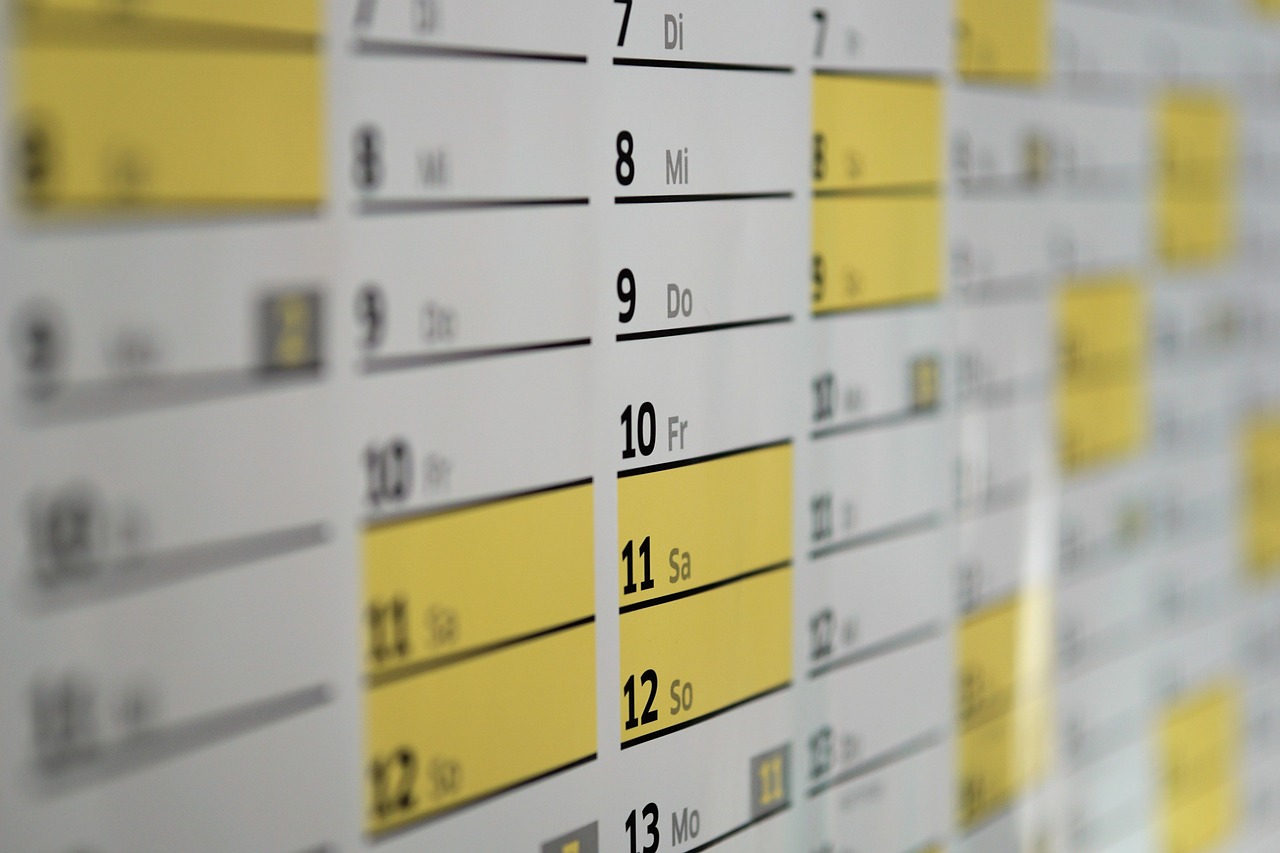
A grid of the whole month across a spread. Each day gets a box roughly an inch square.
Gives you: shape. You can see that the third week is heavy and the fourth is empty, which is the single most useful thing a planner does.
Costs you: detail. An inch square holds one appointment and a word.
Suits: people whose commitments are appointments rather than tasks, and anyone who mainly needs to know what is coming.
Week on two pages, horizontal
Seven days across a spread, each a horizontal band. The most common working layout.
Gives you: enough room for several items a day, with the whole week visible.
Costs you: the month view, unless the planner also has one.
Suits: most people, most of the time. If you are unsure, this is the safe choice.
The variant worth looking for
Week on two pages with the days on the left and a blank or lined page on the right. The lined page absorbs notes, lists and things without a date, which is what usually spills over and makes a planner messy.
Week on one page
Seven days in a single column. Compact, and it halves the thickness of the book.
Costs you: writing room — perhaps two lines a day. It works if your days are genuinely light and fails quietly if they are not, because you start writing in the margins.
Week vertical
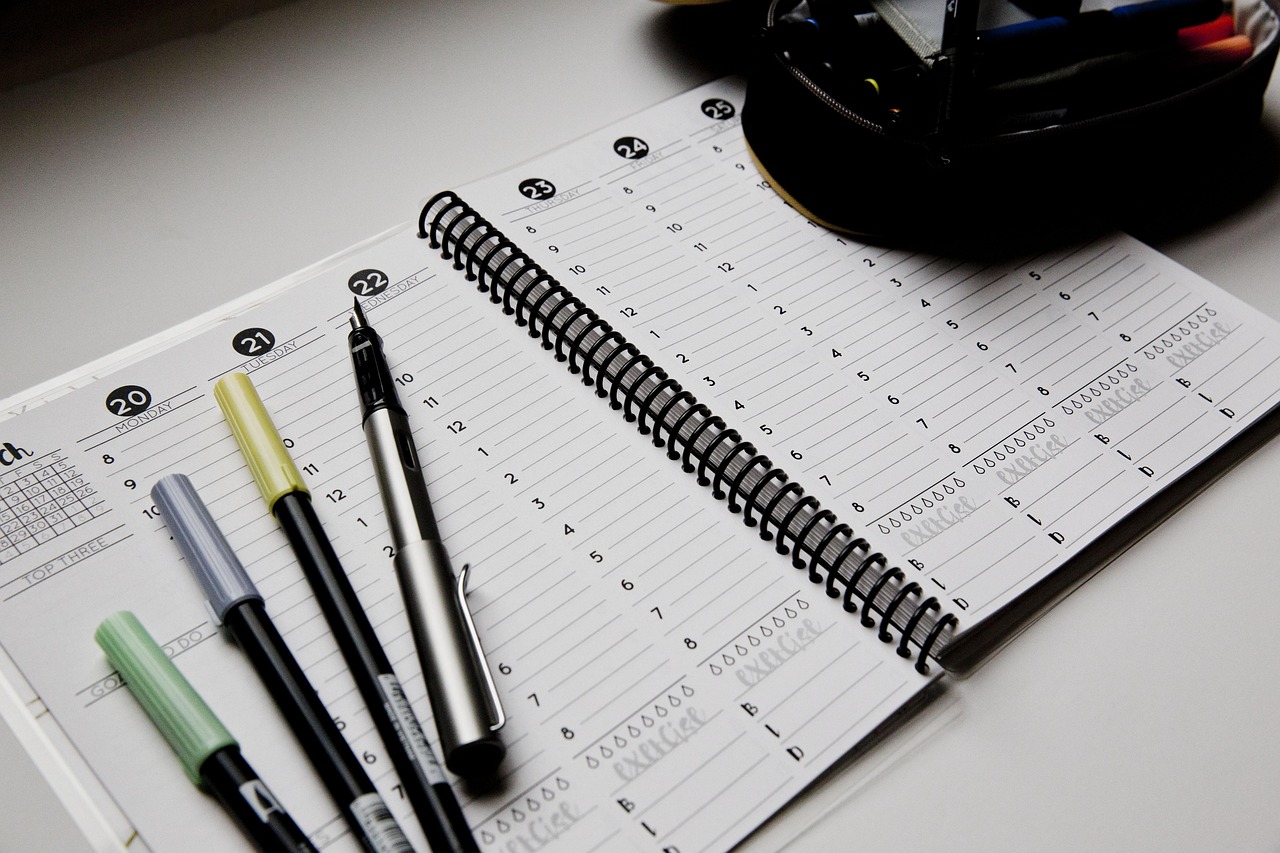
Days as columns with hours down the side. This is a timetable rather than a list.
Suits: anyone whose day is scheduled by time rather than by task — teaching, clinical work, anything with back-to-back appointments. Poor for task-based work, because a task without a time has nowhere to go.
Day per page
A full page for each day.
Gives you: as much room as anyone needs, and space to keep notes alongside the schedule.
Costs you: bulk and weight — a dated day-per-page planner is a substantial book — and all forward visibility. You cannot see next Tuesday without turning to it.
Suits: people with heavy daily detail who keep the planner on a desk rather than in a bag.
The combination that works for most people
A monthly spread at the start of each month, followed by weekly spreads. You plan on the monthly view and work on the weekly view.
Most well-designed planners do this. If a planner has only one or the other, be clear about which job you need it to do.
Practical checks before buying
- Does the week start on Monday or Sunday? Trivial until you use the wrong one for a year.
- Are weekends the same size as weekdays? Many layouts halve them. Fine for some people, unusable for anyone who works weekends.
- Is there space for undated notes? If not, they end up wherever there is room.
- How wide are the lines? Narrow ruling suits small handwriting and frustrates large.
Be honest about your handwriting
The most common mismatch is a compact layout bought by someone who writes large. Look at the actual line spacing in the photographs, not the number of lines quoted.
Our listings give the layout, page size and binding for every planner. Browse Weekly & Monthly Planners.